Awesome Video

Responsive Advertisement

LORD BHAIRAVA The Lord of the March of TIME Story of Kala Bhairav* kala bhairava was a mendicant(beggar) with a begging bowl...

Lord Bhairava - The Lord of the March of TIME (PART 1) Lord Bhairava - The Lord of the March of TIME (PART 1)

As History has its own scientific explanation and Science has its own History, So does Mythology has its own aura. Lets uncover it with Histence.

LORD BHAIRAVA

The Lord of the March of TIME


Story of Kala Bhairav*
kala bhairava was a mendicant(beggar) with a begging bowl in hand. the begging bowl was not just any vessel. it was the skull of brahma's fifth head. lord shiva cut it off to humble brahma and vishnu.
So here goes the story:
Brahmâ and Vishnu were disputing with each other for the status of supreme God and appealed to the testimony of the four Vedas, which unanimously proclaimed Rudra-Shiva as the Ultimate Truth of the Universe. But the disputants were unable to accept that Rudra, endowed with so many revolting symbols of impurity and degradation, could be identical with the Absolute Reality of Brahman. Brahmâ laughed scornfully: "How could the Brahman, free of all attachment, lustily sport with his wife in the company of his troop of deformed churn-goblins (pramatha)?" However, Rudra's supremacy was finally reconfirmed by the esoteric sound-syllable, Omkâra, quintessence of the Veda and most condensed symbol of Brahman, who pointed out that Shiva's wife is not adventitious to her husband but on the contrary embodies his own blissful essence. Just then an immense pillar of flame manifested itself in their midst, within which was recognized the towering figure of the three-eyed Rudra bearing his trident, serpents and crescent moon. But the fifth head of Brahmâ taunted him: "I know who you are, Rudra, whom I created from my forehead. Take refuge with me and I will protect you, my son!"
Overflowing with anger, Shiva created a blazing Bhairava in human form, addressing this Kâlabhairava as "Lord of Time-Death" (kâla) for he shone like the god of Death: "You are called Bhairava because you are of terrifying features and are capable of supporting the universe. You are called Kâla-Bhairava, for even Time-Death is terrified of you." He ordered him to chastise Brahmâ, promising him in return eternal suzerainty over his city of Kâshî (Vârânasî), the cremation-ground of the Hindu universe, where final emancipation is assured. In a trice, Bhairava ripped off Brahmâ's guilty head with the nail of his left thumb. Seeing this, the terrified Vishnu eulogized Shiva and devotedly recited his sacred hymns, followed in this by the repentant Brahmâ. Thereby they gained his protection by realizing and acknowledging the supreme reality of Shiva. The severed head immediately stuck to Bhairava's hand, where it remained in the form of the skull, destined to serve as his insatiable begging-bowl.Enjoining him to honor Vishnu and Brahmâ, Shiva then directed Bhairava to roam the world in this beggarly condition to atone for the sin of Brahmanicide. "Show to the world the rite of expiation for removing the sin of Brahmanicide. Beg for alms by resorting to the penitential rite of the skull (kapâlavrata)." Creating a maiden renowned as 'Brahmanicide' (brahmahatyâ), Shiva instructed her to relentlessly follow Bhairava everywhere until he reached the holy city of Kâshî to which she would have no access.
Observing the Kâpâlika rite with skull in hand and pursued by the terrible Brahmahatyâ, Bhairava sported freely, laughing, singing and dancing with his goblin horde (pramathas). Stealing more than the hearts of all women, even the chaste wives of the Seven Vedic Sages (sapta-rshi) as he passed through the Daru forest, the erotic ascetic arrived at Vishnu's door to seek redemption only to find his entry barred by the guard, Vishvaksena. Spearing the latter and heaving the corpse of this Brahman on his shoulder, he pressed before Vishnu with outstretched begging-bowl. Vishnu split his own forehead-vein (see pic 2) but the out-flowing blood, the only suitable offering, could not fill the skull though it flowed for eons. When Vishnu then tried to dissuade Brahmahatyâ from tormenting Bhairava, the criminal observed that "beggars are not intoxicated by the alms they receive as (are others) by drinking the wine of worldly honor." Vishnu venerated him as the Supreme Being, untainted by sins like Brahmanicide, and acknowledged that his dependence and degradation were a mere fancy. Before leaving joyously to beg elsewhere, Bhairava reciprocated by recognizing Vishnu as his foremost disciple and acknowledged the latter's status as "grantor of boons to all the gods." On arriving at Kâshî, Brahmahatyâ sank into the nether-world, and the holy ground on which the skull fell, freeing Bhairava from his Brahmanicide, came to be known as Kapâlamocana. It was on the eighth day (ashtamî) in the dark (waning moon) half of the month of Mârgashîrsha that Lord Shiva manifested himself as Bhairava. Ever since, by performing ablution at Kapâlamocana one is rid of even the worst sin of brahmanicide (brahmahatyâ); and whosoever fasts on this day (Bhairavâshtamî) in front of Kâlabhairava (temple at Kâshî) and stays awake at night is freed from great sins.
The original Kâla Bhairava temple was located on the banks of the Kapâlamocana Tîrtha itself, in the Omkâreshvara area north of Maidâgin in Vâranasî, where Bhairava remained as the 'Sin-Eater' (Pâpa-Bhakshana) par excellence to devour the accumulated sins of devotees and pilgrims. If the pilgrims to Kâshî do not fear death there, this would be because their pilgrimage to the Mahâshmashâna is conceived on the ritual model of Bhairava's own arrival at Kâshî for absolution from his terrible sin and his subsequent establishment there. The paradox of Bhairava's scapegoat function even after his 'purification' can be explained as a 'lawful irregularity' resulting from the two opposing realizations, diachronically disjoined in the myth, of his transgressive essence; it matches the complementary paradox of the pure Kâshî-Vishvanâtha himself being identified esoterically with the impure criminal Bhairava.


**ASPECT OF SHIVA - CONSORT BHAIRAVI - MOUNT DOG


“ Bhairav is one who with fear (bhaya) makes every thing resound (ravayati) and who pervades the entire universe. He who utters this word ‘Bhairav ‘unceasingly becomes Shiva”

The first syllabus ‘Bhai ‘ means fear and also means refulgent light and both meanings refer the nature of Bhairav

Rava means resound .
That means Bhairava means that by using fear we can get delightment (aseem anand ).

He is often depicted with , angry eyes and sharp, tiger's teeth and flaming hair, stark naked except for garlands of skulls and a coiled snake about his neck. In his four hands he carries a  trident, drum, and skull. He is often shown accompanied by a dog. Lord bhairav worship is very useful to win over your enemies, success and all materialistic comforts. It is very easy to please lord Bhairav by doing normal worship daily. Lord Bhairav guards  Lord Shiva's temple, due to which He is called "Kotwal" also. Batuk Bhairav is the most worshipped form of Bhairav in tantra.Lord Bhairav protects, removes all obstacles, cleans the soul with his sheer intensity and makes things favourable for a sadhak. He is one of the most feared deities, but actually, he is one of the most rewarding.The vahana (vehicle) of Lord Bhairava is the dog.  And he is sometimes shown as holding a severed human head( Head of Brahma), with a dog waiting at one side, in order to catch the blood from the head. Feeding and taking care of dogs is another way of showing our devotion to Lord Bhairava. The best way is to feed 11 dogs on every saturday evening or daily ( as per comfort of sadhak) . The dogs should be feeded halwa puri ( Indian bread with sweat dish ), all problems gets solved automatically by doing this. Lord Bhairava is also known as Kshetrapalaka, the guardian of the temple. In honor of this, keys to the temple are ceremonially submitted to Lord Bhairava at temple closing time and are received from him at opening time. Lord Bhairava is also the guardian of travellers.


108 NAMES OF BHAIRAVA

1. Om Bhairavaaya namaha
2. Om Bhuutanaathaaya namaha
3. Om Bhritaatmane namaha
4. Om Bhuutabhaavanaaya namaha
5. Om Kshetragyaaya namaha
6. Om Kshetrapaalaaya namaha
7. Om Kshetradaaya namaha
8. Om Kshatriyaaya namaha
9. Om Viraaje namaha
10. Om Shmashaanavaasine namaha
11. Om Maamsaashine namaha
12. Om Kharvaroshine namaha
13. Om Smarantakaaya namaha
14. Om Raktapaaya namaha
15. Om Paanayaaya namaha
16. Om Siddhaaya namaha
17. Om Siddhidaaya namaha
18. Om Siddhisevitaaya namaha
19. Om Kankaalaaya namaha
20. Om Kalaashamanaaya namaha
21. Om Kalaakaashtaaya namaha
22. Om Tanaye namaha
23. Om Kavaye namaha
24. Om Trinetraaya namaha
25. Om Bahunetraaya namaha
26. Om Pigala-lochanaaya namaha
27. Om Shuulapaanaye namaha
28. Om Khadgapaanaye namaha
29. Om Kapaaline namaha
30. Om Dhuumralochanaaya namaha
31. Om Abhirave namaha
32. Om Bhauraviinaathaaya namaha
33. Om Bhuutapaaya namaha
34. Om Yoginiipataye namaha
35. Om Dhanadaaya namaha
36. Om Dhanahaarine namaha
37. Om Dhanavate namaha
38. Om Priitivardhanaaya namaha
39. Om Naagahaaraaya namaha
40. Om Naagapaashaaya namaha
41. Om Vyomakeshaaya namaha
42. Om Kapaalabhrite namaha
43. Om Kaalaaya namaha
44. Om Kapaalamaaline namaha
45. Om Kamaniiyaaya namaha
46. Om Kalaanidhaye namaha
47. Om Trilochanaaya namaha
48. Om Jvalannetraaya namaha
49. Om Trishikhine namaha
50. Om Trilokashaaya namaha
51. Om Trinetrataapaaya namaha
52. Om Dibhaaya namaha
53. Om Shaantaaya namaha
54. Om Shaantajanapriyaaya namaha
55. Om Batukaaya namaha
56. Om Batuveshaaya namaha
57. Om Khatvaangadhaarakaaya namaha
58. Om Yanaadhyakshaaya namaha
59. Om Pashupataye namaha
60. Om Bhikshukaaya namaha
61. Om Parichaarakaaya namaha
62. Om Dhuurtaaya namaha
63. Om Digambaraaya namaha
64. Om SHuuraaya namaha
65. Om Harine namaha
66. Om Paandulochanaaya namaha
67. Om Prashaantaaya namaha
68. Om Shaantidaaya namaha
69. Om Siddhaaya namaha
70. Om Shankarapriyabaandhavaaya namaha
71. Om Ashtamuurtaye namaha
72. Om Nidhiishaaya namaha
73. Om Gyaanachakshushe namaha
74. Om Tapomadaaya namaha
75. Om Ashtaadhaaraaya namaha
76. Om Shadaadhaaraaya namaha
77. Om Sarpayuktaaya namaha
78. Om Shikhisakhaaya namaha
79. Om Bhuudharaaya namaha
80. Om Bhuudharaadhiishaaya namaha
81. Om Bhuupataye namaha
82. Om Bhuudharaatmagyaaya namaha
83. Om Kankaaladhaarine namaha
84. Om Mundine namaha
85. Om Naagayagyopavitavate namaha
86. Om Jribhbhanaaya namaha
87. Om Mohanaaya namaha
88. Om Stambhine namaha
89. Om Maranaaya namaha
90. Om Kshobhanaaya namaha
91. Om Shuddhaniilaamjanaprakhyaaya namaha
92. Om Dvityaghne namaha
93. Om Mundabhuushitaaya namaha
94. Om Balibhuuje namaha
95. Om Balibhunanaathaaya namaha
96. Om Baalaaya namaha
97. Om Baalaparaakramaaya namaha
98. Om Sarvaapattaaranaaya namaha
99. Om Durgaaya namaha
100. Om Dushta Bhuutanishevitaaya namaha
101. Om Kaamine namaha
102. Om Kalaanidhaye namaha
103. Om Kaantaaya namaha
104. Om Kaaminiivashakridvashine namaha
105. Om Sarvasiddhipadaaya namaha
106. Om Vaidyaaya namaha
107. Om Prabhave namaha

108. Om Vishnave namaha


He is the manifestation of Lord Shiva who manages time. There is nothing more precious than time, so intelligent humans should use every moment effectively on the spiritual path. Those, who want to do this, can get the divine help of Lord Kala Bhairava, if they request Him with sincerity. Those who tend to dissipate away their time on many a trivial pursuit should pray sincerely to Lord Kala Bhairav, if they want to improve their time management skills and use their time intelligently. According to Hindu scriptures, natives who worship Kalabhairava to reduce the evils caused by Sani because Sani is also known as Kaal. Both Kala Bhairava and Sani are signified by the colour black. Lord Kala Bhairav is worshipped by Yogis and Tantriks to attain Siddhis. Lord Bhairav is regarded as the guardian of Yogis and Tantriks, who attain accomplishment of mantras by doing devotion. Many astrologers and tantriks keep Bhairon Booti with them to enhance their occult knowledge. 

Kala Bhairava has a place in all the main temples of Lord Shiva. According to texts about the origin of Kala Bhairava, it is related to the tale of Sati, wife of Lord Shiva, the daughter of the king of Gods, Daksha had chosen to marry Lord Shiva. Her father turned down their alliance due he perceived Lord Shiva as ascetic, associated with Ox, animals and ghosts and did not have a royal lifestyle. Daksha held a yagna and invited all the gods, but not Sati and Shiva. Sati came to the yagna alone where Daksha publicly spoke in a belittling manner about Lord Shiva. Sati could not bear to hear her husband insulted and jumped herself into the sacrificial pyre. When Lord Shiva came to know about this, he destroyed the yagna and killed Daksha by beheading him. Lord Shiva carried Sati's corpse on his shoulders and ran uncontrollably all around the world for days. Since, this would eventually destroy all creation, Lord Vishnu used His Sudarshan Chakra to cut Sati's body into pieces which then fell all around. These spots where Sati's body parts fell are now known as Shakti Peethas. In the form of the frightful Bhairava, Lord Shiva is said to be guarding each of these Shakti peethas. That is why, each Shaktipeeta temple is accompanied by a temple dedicated to Kala Bhairava.

         There are 2 important aspects of Bhairav Sadhana. One should be regular in Sadhana and one should not be afraid. 

At the end , let me please  clarify ,that I am not a Tantric nor an astrologer . I am just a simple devotee of the Almighty Lord. So please forgive me ,if anything on this site is found to be wrong. This site is for vedic worship of Bhagavan Bhairav. We do not want  the devotees to indulge in eating of non vegetarian food, nor in drinking of alcoholic drinks. Killing innocent animals and birds in the name of Bali is totally wrong and unforgivable.

Legends
Kala Bhairava, Kathmandu, Nepal

Bhairava with his consort, Bhairavi
The origin of Bhairava can be traced to a conversation between Brahma and Vishnu which is recounted in the Shiv Mahapuran. In it, Vishnu inquired of Brahma, "Who is the supreme creator of the Universe?" Arrogantly, Brahma told Vishnu to worship him as Supreme Creator. One day, Brahma thought "I have five heads. Shiva also has five heads. I can do everything that Shiva does and therefore I am Shiva." Brahma became a little egotistical as a result of this. Additionally, he began to forge the work of Shiva and also started interfering in what Shiva was supposed to be doing. Consequently, Mahadeva (Shiva) threw a small nail from his finger which assumed the form of Kala Bhairava and casually went to cut off one of Brahma's heads. The skull of Brahma is held in the hands of Kala Bhairava; Brahma Kapala in the hands of Kala Bhairava and Brahma’s ego was destroyed and he became enlightened. From then on, he became useful to himself, to the world and deeply grateful to Shiva. In the form of the Kala Bhairava, Shiva is said to be guarding each of these Shaktipeeths. Each Shaktipeeth temple is accompanied by a temple dedicated to Bhairava.

Bhairava himself has eight manifestations i.e. Ashta Bhairava:
Asithaanga Bhairava
Ruru Bhairava
Chanda Bhairava
Krodha Bhairava
Unmattha Bhairava
Kapaala Bhairava
Bheeshana Bhairava
Samhaara Bhairava

Dogs and Kala Bhairava
The vahana (vehicle) of Lord Kaala Bhairava is the dog. Feeding and taking care of dogs is another way of showing our devotion to Lord Kaala Bhairava.

Kala Bhairava day
 Kala Bhairava Ashtami, which generally occurs in December/January is an important day for worshipping the Lord.


Kala Bhairava 
= Kala Shakti Bhairava 
= Kala Chakra Bhairava

  In the modern era, it was the Bhairava Siddha Sathguru Venkataraman who first revealed Sri Kala Bhairava Lordship of time to the world at large through numerous articles in the Ashram monthly magazine.

 Till then, the word Kala in Kala Bhairava was taken to mean black and Kala Bhairava was referred to as the Black Bhairava or the Terrible One.

 But Sathguru Venkataraman pointed out that Kaala Bhairava actually was a shortened form of Kala Shakti Bhairava - the Lord who controls the Shakti of Kala - the Power of Time.

 Thus He is the Lord of the March of Time or Kalachakra Bhairava, said the Sathguru, since the shakti of Time that is most obvious to us is its inexorable march.


List of Bhairava temples

Types of Bhairava

Kshethra Pala Bhairava
[Guard of Earth Bhairava]

Raktha jwalaa Jada dharam, sasi dharan, Rakthanga thejo mayam,
Dakka Shoola kapala pasa gadha dharam Bhairavam,
Nirvanam Gathavahanam Trinayanamcha Ananda kolahalam,
Vande bhootha pisacha natha vadukam Kshethrasya palam Shubham. 1

I salute the leader of ghosts and Ghouls, Lord Bhairava,
Who wears the red flame as his matted hair,
Who wears the moon, who shines in red colour,
Who holds a drum, spear, skull, rope and mace in his hands,
Who is nude, who rides on a dog, who has three eyes,
Who is always happy and exuberant and is the guard of the temple.

Asithanga Bhairava
[Dark Bodied Bhairava]

Trinethram, varadam shantham, munda mala bhooshitham,
Swetha varnam, krupa murthim, Bhairavam Kundalojjwalam,
Gada kapala samyuktham, kumarsya digambaram,
Banam pathrancha sankham cha Aksha maalaam kundalam,
Naga Yagnopaveetham cha dharinam suvibhooshitham,
Brahmani shakthi sahitham, hamsaroodam suroopinam,
SArvabheeshta dharam nithyam asithangam Bhajamyaham. 2

I pray the dark Bhairava who fulfills all desires,
Who is forever, who has three eyes, who blesses and is peaceful,
Who wears a skull garland, who is white, who is the Lord of mercy,
Who shines in his ear globes, who holds mace and the skull,
Who is young and nude, who holds arrow, vessel, conch, bead chain and ear globes,
Who wears snake as sacred thread, who is well ornamented,
Who is with Goddess Brahmani, rides on a swan and is good to look at.

Krodha Bhairava
[Angry Bhairava]

Trinethram, varadam, santham, kumarancha digambaram,
Gadam shankam cha Chakrancha pada pathrancha dharinam,
Lakshmyacha sahitham vame garudasana susthitham,
Neela varnam maha devam Vande Sri Kroda Bhairavam. 3

I salute the angry Bhairava, who is blue and a great God,
Who has three eyes, blesses, peaceful, young and nude,
Who is armed with mace, conch, wheel, rope and a vessel,
Who is near Goddess Lakshmi riding on Garuda the eagle.

Unmatha Bhairava
[Frantic Bhairava]

Trinethram, varadam, santham, kumarancha digambaram,
Hema Varnam, maha devam, hastha vahana susthitham,
Gadgam, kapalam, musalam, dathantham, kedagam thadha,
Varahi shakthi sahitham Vande Unmatha Bhairavam. 4

I salute that Frantic Bhairava who is power called Varahi,
Who has three eyes, blesses, peaceful, young and nude,
Who is of golden colour, great God and rides on a swan,
And who holds sword, skull, Pestle and also the shield.


Ruru Bhairava
[Teacher Bhairava]

Trinethram, varadam, santham, kumarancha digambaram,
Dangam krisna mrugam pathram bibranam chakru panakam,
Maheswaryayudham devam vrusharoodam smitha vahanam,
Shudha sphatikam sankaram, namami Ruru Bhairavam. 5

I salute the Bhairava with the deer, who is like pure crystal and a destroyer,
Who has three eyes, blesses, peaceful, young and nude,
Who holds a hatchet, deer, drinking goblet and a sword in his hands,
Who has the armed Maheswari by his side and who is smiling and rides on a bull.

Kapala Bhairava
[Skull Bhairava]

Trinethram, varadam, santham, kumarancha digambaram,
Pasam, Vajram, thadha Gadgam pana pathranch dharinam,
Indrani shakthi sahitham Gaja vahana susthitham,
Kapala Bhairavam Vande padma ragha prabham Shubham. 6

I salute the Bhairava of the skull, who has a shining body,
Who has three eyes, blesses, peaceful, young and nude,
Who holds rope, Vajrayudha, Sword and Drinking Goblet,
Who has with him Indrani Shakthi, is being well praised and rides on an elephant.

Chanda Bhairava
[Fierce Bhairava]

Trinethram, varadam, santham, kumarancha digambaram,
Dhanur banancha bhibranam, Gadgam Pathram Thadaiva cha,
Koumari shakthi sahitham, Shikihi vahana sthitham,
Gowri varnayudham Devam Vande Sri Chanda Bhairavam. 7

I salute the Chanda Bhairava who is pure white in colour,
Who has three eyes, blesses, peaceful, young and nude,
Who holds rope, Vajrayudha, Sword and Drinking Goblet,
Who has with him Kaumari Shakthi and rides on a peacock.

Bheeshana Bhairava
[Terriffic Bhairava]

Trinethram, varadam, santham, kumarancha digambaram,
Gadgam soolam Kapalancha darinam musalam thadha,
Chamunda shakthi sahitham pretha vahana susthitham,
Raktha varnam maha devam Vabde Bheeshana Bhairavam. 8

I salute the Terriffic Bhairava who is a great God of blood red colour,
Who has three eyes, blesses, peaceful, young and nude,
Who holds sword, trident, skull and pestle in his hand,
Who has with him Chamunda Shakthi and rides on a corpse.

Samhara Bhairavam
[Annihilator Bhairava] 

Dasa bhahum trinethram cha sarpa yagnopaveethinm,
Damishtra karala vadanam ashtaiswarya pradhayakam,
Digambaram kumarancha simha vahana samsthitham,
Soolam damarugam shankam, gadam chakrancha darinam,
Gadgam pathram cha Gadwangam pasa mangusa meva cha,
Ugra roopam madonmathamam bada vaalai,
Chandika shakthi sahitham dyayeth samhara Bhairavam. 9

I meditate on Bhairava the destroyer, who is with Chandika Shakthi,
Who has ten hands, three eyes and snake as sacred thread,
Who has protruding teeth, fearful look and grants eight type of wealth,
Who is nude, a youth and rides on a lion,
Who holds trident, drum, conch, mace and wheel in his hands,
Who holds sword, vessel, Gadwangam, rope and goad.
And who has fearful looks, wears skull garland and greatly exuberant.
Jai Guru
Jai Bhairav Nath!


Swarnaksharan mantra

Why Bhairava Sadhana?

Out of all the 33 crore gods what is so unique about Lord Bhairava ? And why should one do his sadhana? Let me first begin by saying that Lord Bhairava is the All mighty Sat-chit-ananda , who has taken the form of time. He is nothing different from   The Almighty.  And   that almighty is Ocean of Sat , ocean of Chit and ocean of happiness! So Lord Bhairava cannot be anything different from that  ocean of happiness!  Lord Bhairava is not a tantrik mumbo jumbo or a cruel deity , but a manifestation of the almighty in the form of time.

His nature is Tamas , i.e he takes you from tamas to moksh. He removes all your sufferings , difficult problems,  anxieties  and greed. He is said to live on the crematory grounds because , he does not want to be associated with   maya( the illusionary world). He is fast . His sadhana yields results very fast.and he is said to be pleased with little practise also.  Particularly those who are poor and are in much need of help should worship him. That does not mean that the rich should forget him , no, the rich can gain a lot by his worship, as they can get moksh very fast.

It is always advisable to first ask your Guru for permission before beginning any sadhana. And this is no different. If you do not have a guru, please pay your respects to Datta Guru or any saint . Then  , after worshiping Lord Ganesha, your Family deities ( Kul devta and Kul Rakshak) begin Lord Bhairav Sadhana and success will be yours!. 

Worship

Shri Swarna Kala Bhairava consecrated at Kaga Ashram, Tiruvannamalai, India
Temples or shrines to Bhairava are present within or near most Jyotirlinga temples. There are also the sacred twelve shrines dedicated to Shiva which can be found all across India including the Kashi Vishwanath Temple, Varanasi and the Kal Bhairav temple, Ujjain. The Patal Bhairav and Vikrant Bhairav shrines are located in Ujjain as well.

Kala Bhairava temples can also be found around Shakti Peethas. It is said that Shiva allocated the job of guarding each of the 52 Shakti Peethas to one Bhairava. There are said to be 52 forms of Bhairava, which are considered a manifestation of Shiva himself.

Traditionally, Kal Bhairav is the Grama devata in the rural villages of Karnataka, Maharashtra and Tamil Nadu, where he is referred to as "Bhairava/Annadani" Vairavar. In Karnataka, Lord Bhairava is the supreme God for the community and commonly referred to as "Gowdas." In the Gangadhara Gowda caste especially, he is considered the caretaker and punisher.

Another set of people in Kashmir that have their origin from Gorat, or the minister of Mata Sharika, worship Bhairava during Shivratri


The Hindu reformer, Adi Sankara, has written a hymn on Kalabhairava of Kashi which is called Kala Bhairav Ashtakam.

HOPE YOU ALL LIKE THE POST. SHARE IT AND LIKE IT.

Analysing with Astrology : Rashi As seen in 1st chapter , astrological science has some prime ingredients like planets and adding to t...

Analysing with Astrology : Rashi Analysing with Astrology : Rashi

As History has its own scientific explanation and Science has its own History, So does Mythology has its own aura. Lets uncover it with Histence.

Analysing with Astrology : Rashi

As seen in 1st chapter , astrological science has some prime ingredients like planets and adding to them there are constellations (Rashi) and nakshaktras.
Out of 88 known constellations, vedic astrology uses 12 major constellations known as Rashi. These rashis are more significant because they follow ecliptic. Ecliptic is an astronomical imaginary line made by suns motion around the Earth. Even other planets and Rashis and moon follows ecliptic. Hence these rashis are given more importance over rest 76 constellations out of 88.

These rashis namely : Mesh (Aries) , Vrushabh (Taurus ), Mithun (Gemini), Karka (Cancer), Sinha (Leo), Kanyaa (Virgo), Tula (Libra), Vrishchik (Scorpio), Dhanu (Sagittarius), Makar (Capricorn), Kumbha ( Aquarius) and Meen (Pisces).

Astronomically each Rashi is a 30 degree part of celestial globe.
30 degree *12 Rashi = 360 degree.
Every Rashi consists of 2.25 nakshatra.

Moon stays for one day in each nakshatra and 2.25 days in each Rashi. 27 days in 12 rashis , completing a lunar month in 27 days And sun stays for 30 days in each Rashi , hence completing a year of 12 solar months.

Every Rashi has its general characteristic, which defines it and gives them uniqueness.
Since rashis are subdivided into 2.25 nakshatras, each nakshatra shows different characteristics, making the  analysis tending towards perfection.

Coming back on the topic of Rashi, every Rashi has been given a particular shape and a form. Eg. Taurus has a bull face, Scorpio has scorpion shape in it, etc.

And hence it possess the characteristics of the same creature or shape upto some extent. In vedic astrology out if 12 rashis one Rashi belongs to us as a birth rashi, generally known as moon sign.
These rashi are calculated mathematically and a sky map is made which is commonly known as Kundli or horoscope. It includes position on Rashi and all the navgrahas i.e. nine vedic planets and rest 3 planets namely Uranus, Neptune and Pluto.

Every Rashi is ruled by one of the 7 planets viz.
Aries - Mars
Taurus - Venus
Gemini - Mercury
Cancer - moon
Virgo - Mercury
Libra - Venus
Scorpio - Mars
Sagittarius - Jupiter
Capricorn - Saturn
Aquarius - Saturn
Pisces - Jupiter
Rahu, Ketu, Uranus, Neptune and Pluto do not rule any Rashi.


It could be said that Rashi is a static concept which in kundli becomes highly dynamic.

-Histence 2016

In Mahabharata, the designer of the system (or system itself) called as Krishna, provides information called as "Bhagavad Gita" ...

Mahabharata and its Science Coming Soon Intro Mahabharata and its Science Coming Soon Intro

As History has its own scientific explanation and Science has its own History, So does Mythology has its own aura. Lets uncover it with Histence.

In Mahabharata, the designer of the system (or system itself) called as Krishna, provides information called as "Bhagavad Gita" which is the manual of the Universal system in a human perspective.

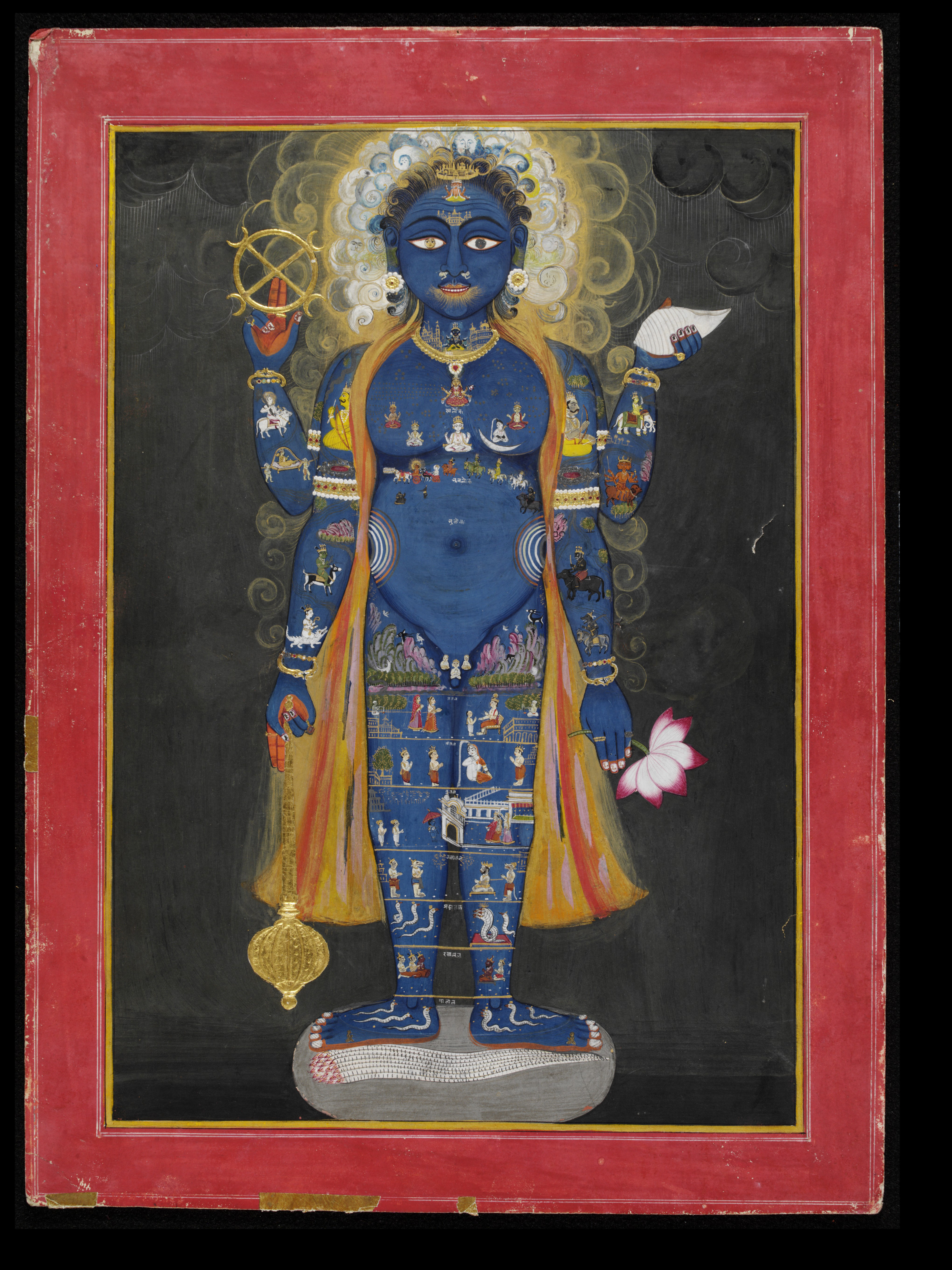
Here Krishna provides special perceivable capability to Arjuna (Gnana dhrushti) to visualize his eternal and endless cosmic form called as Vishwaroopa.  He says in Chapter 11 verse 8 that you (Arjuna) cannot view me with your ordinary vision, I will give you visionary abilities to perceive me beyond humanly possible dimensions.

In Chapter 11, verse 16, Arjuna say he is not able to see the boundaries of this cosmic form, nor the middle nor the starting.   

In chapter 11, verse 29 of the Bhagavad Gita Arjuna stunned by the "Vishwaroopa" of Krishna states the following.  "yatha pradiptam jvalanam padhanga visanti naasaya samrddha-vegah tathaiva naasaya visanti lokas tavapi vaktrani samrddha-vegah"


As moths with great speed enter into a blazing fire to perish: similarly all these stars and planets (lokas) at great speed are entering into your mouths to perish.  

This should be Arjuna's visualization of the stars and planets (lokas) coming very nearer to the black holes (mouths) and therefore becoming more faster to perish into it.  Also note here vaktrani is plural not singular (ie. mouths and not mouth).  It clearly matches innumerable number of super massive black holes consuming stars and planets that comes near to it like moths.

This is more confirmed by the next verse, "lelihyase grasamanah samantal, lokan samagran vadanair jvaladbihi tejobhir apurya jagat samagram, bhasas tavograh pratapanti vishno

Here Arjuna states "Vishnu or He who pervades the entire creation consuming all the worlds (lokan samagran) Furthermore the blazing effulgence radiating from the visvarupa is so bright that it is scorching the universe with its brilliance.

As a conclusive part of the Bhagavad Gita Krishna states  "yada yada hi dharmasya  glanir bhavati bharata  abhyutthanam  adharmasya tadatmanam srjamy aham" which we could scientifically mean whenever and wherever there is a decline in "following the universal system" and a predominant rise against the "universal system", the system itself immediately takes automatic ways and means to correct it.  The system takes action based on the magnitude of the deviation. So more an biological entity or a group of entities scientifically advance, more formidable way they may create deviations.


More described and thro pdf, We are going to Release it in somedays .

-Histence 2016

Maan - respect : Sanmaan - self respect. The whole shrimad bhagwatgita revolves around the concept of KARMA, and it teaches about respect. ...

Respect : Approaching God Respect : Approaching God

As History has its own scientific explanation and Science has its own History, So does Mythology has its own aura. Lets uncover it with Histence.

Maan - respect : Sanmaan - self respect.

The whole shrimad bhagwatgita revolves around the concept of KARMA, and it teaches about respect. Bhagwatgita says " one should respect each and every life , material and emotion. Every material and immaterial system on this planet has to be respected evenly. The Good, The Bad, The Right, The Wrong, The Big, The Small and all the worldly deeds has to be respected. The solid, The liquid, The gas, The ether, The energy , The mass must be respected equally.
Respect is the core commodity which is followed by Hindus. Insects, birds, animals, human, reptiles, aquatics,  scavengers, are never decided of respect.
One must understand the concept of respect , which is the first divine step towards divinity. Respect gives rise to love and love gives rise to respect, as if both god. Walks hand in hand.

To utter this respect to the fullest in Hinduism, there are vedic  deities dedicated. Viz. Agni Dev - Fire God, Varun Dev - Rain God, Vayu Dev - air God, Pavan Dev - Wind God, Devraj Indra - The God of emotions and psych, Surya Dev - Sun God, Soma Dev - Moon God, Brihaspati - The almighty teacher of all the deities, Planet gods, Yaksha Yakshini - Nature God, Natraj - Dance God, Annapurna - The goddess of food, Saraswati Devi - Goddess of wisdom, Laxmi Devi - Goddess of wealth, Parvati Devi - Goddess of power, Dharti Mata - Mother Earth.

Hence in Hinduism, one has to respect whole material and immaterial world.

Psychologically one who follows this principle, stays happy for long. And one who attains this state to the fullest attains neutrality in life, and he/she tends to become Godly.

Analysing with astrology    Analysis is what uttering most in picture today. Psychological, physiological, mental, body language, etc. The ...

Analysing with astrology Analysing with astrology

As History has its own scientific explanation and Science has its own History, So does Mythology has its own aura. Lets uncover it with Histence.

Analysing with astrology

   Analysis is what uttering most in picture today. Psychological, physiological, mental, body language, etc. The daily life in 21st century starts with justifying thoughts. And many has accepted as a profession. After the educational revolution, the method and ways of analysis has changed with some modification in concepts. The so-called material world has forgotten the history of world and the preciseness which was attained after centuries of study and practice.

But still some have continued the historical sciences and gave it a existence in this Materialistically biased world. The case goes with one of the ancient analytical sciences of Asiatic origin, commonly known as Astrology. Wherein the similar analytical jobs were performed as today done by psychologists, gesture experts and graphologists. Even Been more  precise , the ancient astrological sciences is in the state of critics. Obviously the thing which exists in this world has to get criticised, so it don't need any justifications over the counterpart.


      It is said that , more the time invested in development and studies, the more better it is. Here astrology has been developed since the vedic time. The pioneers in ancient Astrology has invested there lives of hundreds of year in Satyug. """"" No matter it may feel too vedic to read this. """""
It is usually said that 9 planets which includes a Sun a Moon and two such planets 'Rahu and Ketu' which dosent exists physically in the universe, how could they make analysis. And still our universe as well our galaxy has many contents.  So why not rest includes in astrology?


Asian astrology follows a geocentric model of the solar system since there's life only on our mother planet Earth. Sun gives us life, moon acknowledges the same maintaining all the physical and geological parameters on the mother earth for survival. The sun and other physical planets including Earth are the  Part of single body . Rahu and Ketu are the non physically existing astronomical points related to sun and moon.
As earth belongs to this solar system, astrologers do not tend to go beyond it.


According to law of conservation of energy and mass the elements by which we are made are the same as during the formation of our solar system.


    So why ain't we don't belong to extra planetary stuffs?
Yes we do belong and hence here astrology using planets, work. Centuries of research have made astrology more and more justifying. 


Deeds! Vedically known as KARMA, is foreground and background of ancient Astrology, which is irrespective of being theist or atheist . Every living being on this planet is born under the same celestial blanket. Hence each life undergoes a phase known as life, where its deeds are what which is seen. These deeds  can be predicted as well as justified through astrology. The analysis of a persons material and immaterial life can be made by astrological sciences in a precision and accuracy .

LOKAS Satyaloka, Tapoloka, Janaloka, Maharloka, Suvarloka, Bhuvarloka, Bhuloka, Atala, Vitala, Nitala, Rasatala, Mahatala, Sutala an...

LOKA - Worlds, Levels or Stairs - HINDU. LOKA - Worlds, Levels or Stairs - HINDU.

As History has its own scientific explanation and Science has its own History, So does Mythology has its own aura. Lets uncover it with Histence.

LOKAS


Satyaloka, Tapoloka, Janaloka, Maharloka, Suvarloka, Bhuvarloka, Bhuloka, Atala, Vitala, Nitala, Rasatala, Mahatala, Sutala and Patala.


The Puranas usually describe these worlds as different regions of the observable universe (the planet Earth, Earth's immediate neighborhood and regions far beyond). Bhagavata Purana has many passages that describe these worlds as inhabited planets with movement of people between them through some kind of inter planetary travel.

The scholar Deborah Soifer describes the development of the concept of lokas as follows:

The concept of a loka or lokas develops in the Vedic literature. Influenced by the special connotations that a word for space might have for a nomadic people, loka in the Veda did not simply mean place or world, but had a positive valuation: it was a place or position of religious or psychological interest with a special value of function of its own.Hence, inherent in the 'loka' concept in the earliest literature was a double aspect; that is, coexistent with spatiality was a religious or soteriological meaning, which could exist independent of a spatial notion, an 'immaterial' significance.The most common cosmological conception of lokas in the Veda was that of the trailokya or triple world: three worlds consisting of earth, atmosphere or sky, and heaven, making up the universe."


Ancient Indian Astronomers :-


Valikhilyas
A group of sages called the Valikhilyas are counted as among the most ancient astronomers of India. They were descendants of the sage Kratu. Sage Kratu is etymologically connected with Crete in Greece, the the centre of the Minoan civilization. Valikhilyas were experts in analyzing the motion of the Sun (across the sky of Earth) and in creating a solar calendar based on it. These calenders were used by people to predict seasonal changes, arrival of rains, finding the best time to saw seeds and to harvest crops. Ancient Indian kings adopted this solar calender from the Valikhilyas and by doing so they were called Solar Dynasty kings.

The Ikswakus were prominent among the Solar Dynasty Kings. A calendar based on the motion of Sun (as against that based on the motion of Moon) tend to be more accurate in the southern latitudes. This could mean that the Valikhilyas and the Ikshwakus, who adopted their solar calender, could be originally from the souther parts of India, such as from the Godavari river valley and coastal Andhra Pradesh. Lunar calender based on the motion of Moon was popular in northern India due to difficulty in observing the motion of Sun accurately in these higher latitudes. The kings who adopted Lunar calender later became known as the Lunar Dynasty kings. The Purus, the Bharatas and the Kurus were Lunar Dynasty kings.

Danava Maya
Maya was a great architect who construct buildings, cities, vehicles (boats, ships and Vimanas). Mahabharata mentions that he even created space-crafts that orbit around Earth. He belonged to the Danava tribe. Definitely his architectural skill also required him to get familiarized with astronomy and mathematics (including trigonometry). He has done several astronomical calculations, arriving at the orbital periods of visible planets, their distance from Earth and their diameters. He is credited with the Surya Siddhanta, a work dealing with astronomy where he had described about the results of his analysis. 'Surya' means 'Sun' and 'Siddhanta' means 'theory'. Thus Surya Siddhanta could mean the Theory of Sun or the Theory of Solar System.

Some of the interesting conclusions of Surya Siddhanta, whose original author was Maya but which was subsequently updated by later astronomers of India are the following:-
The average length of the tropical year as 365.2421756 days, which is only 1.4 seconds shorter than the modern scientific value of 365.2421904 days but more accurate than the value given by the Gregorian calendar (which gives the average length of the year as 365.2425 days)
The average length of the sidereal year, the actual length of the Earth's revolution around the Sun, as 365.2563627 days, which is virtually the same as the modern scientific value of 365.25636305 days
Estimate for the diameter of Mercury is 3,008 miles, an error of less than 1% from the currently accepted diameter of 3,032 miles.
Estimate for the diameter of Saturn as 73,882 miles, which again has an error of less than 1% from the currently accepted diameter of 74,580
Estimate for the diameter of Mars is 3,772 miles, which has an error within 11% of the currently accepted diameter of 4,218 miles.
Estimate of the diameter of Venus as 4,011 miles and Jupiter as 41,624 miles, which are roughly half the currently accepted values, 7,523 miles and 88,748 miles, respectively went wrong
Probably he could not correctly gauge the relatively high brightness of planet Venus and Jupiter, affecting their diameter estimates; similarly Mars is a dull red planet affecting its diameter estimate.

It is learned that the original Surya Siddhanta contained the description of the spherical shape of Earth (that the Earth is not flat but a sphere), the rotation of Earth on its own axis as well as its revolution around Sun. If proved right this will be first recorded instance of Helio-Centric theory in human history. What makes things difficult is that most of the verses of the Surya Siddhanta is lost (only half available now) and that the older versions of the Siddhanta too is lost or modified. Most of the information that we have about this text and its contents is from secondary sources like the works of Aryabhata and Varahamihira who were inspired by this text and its findings.

Danava Maya's connection with the Meso American Mayans
It is impossible to ignore the etymological similarity of Maya with the Mayans of Meso America. The Mayan civilization is known for their astronomical systems (like the Mayan calender) and predictions based on them. Researchers are still not sure if there is any connection between Maya Danava and the Mayans of Meso-America. My analysis shows that the term 'Maya' was not just the name of a person but that of a tribe (the Maaya tribe / the Maayas) but applied to the members of this tribe who lived at different period of time.

There are also many direct and indirect evidence showing the interaction of ancient Indians with Meso America through ancient sea-trade networks in huge Indian ships capable of carrying 500 or more people. Besides this, Human Genome Project shows a north-eastern migration starting from India, through Tibet, Mongolia, Russia, North America, Meso America and South America.Analyzing the ancient Indian literature, this migration could be identified with the Naga-Suparna, Danava-Deva migration from ancient India in the north-eastern direction mentioned in the Indian scriptures. This will be discussed in a different article.

Parasara
Parasara was a contemporary of Maya. He was also the father of Vyasa, the author of the great epic Mahabharata. Parasara is well known as an astronomer of ancient India and his treaties on astronomy called Parasara-Samhita (Parasara-Hora-Sastra) is still preserved. His works on astronomy and cosmology had somehow got its way into some of the Puranas authored after his life time. Vishnu Purana and Bhagavata Purana are some among these Puranas. Vishnu Purana is one of the 18 major Puranas of ancient India and the most authentic among them as per many scholars.

Parasara's definitions on Bhur, Bhuva and Swar Lokas
Vishnu Purana: Chapter 7:- Parasara Said:- The sphere of the earth (or Bhúr-loka), comprehending its oceans, mountains, and rivers, extends as far as it is illuminated by the rays of the sun and moon; and to the same extent, both in diameter and circumference, the sphere of the sky (Bhuvar-loka) spreads above it (as far upwards as to the planetary sphere, or Swar-loka).

The solar orb is situated a hundred thousand leagues from the earth; and that of the moon an equal distance from the sun. At the same interval above the moon occurs the orbit of all the lunar constellations. The planet Budha (Mercury) is two hundred thousand leagues above the lunar mansions. Śukra (Venus) is at the same distance from Mercury. Angáraka (Mars) is as far above Venus; and the priest of the gods (Vrihaspati, or Jupiter) as far from Mars: whilst Saturn (Sani) is two hundred and fifty thousand leagues beyond Jupiter. The sphere of the seven Rishis (Ursa Major) is a hundred thousand leagues above Saturn; and at a similar height above the seven Rishis is Dhruva (the pole-star), the pivot or axis of the whole planetary circle. Such, Maitreya, is the elevation of the three spheres (Bhúr, Bhuvar, Swar) which form the region of the consequences of works. The region of works is here.

A theory close to the theory of Gravitation
Some of these descriptions seems to be plain wrong (like Moon being father than Sun, distance of Mercury being same as that of Venus) by what we know from modern astronomy but some are astonishingly true (like the distance towards Venus, Mars, Jupiter and Saturn)! Parasara seems to have based his estimate of the distance of a planet upon the time the planet takes to complete one revolution (orbital period). Orbital revolution of planets is an observable phenomenon. Longer the orbital period, farther the distance. Thus Parasara was very close to discovering the theory of gravitation which states that orbital period is inversely proportional to the square of distance. This might also lead him to misjudge the distance of the Sun in comparison to the Moon. The apparent orbital period (1 day) of Sun is shorter than that of Moon (1 month). The apparent orbital periods of Mercury and Venus is almost equal; hence he concluded they are of the same distance.

The Source of the Astronomical Knowledge
It is possible that some space-faring civilization passed on astronomical information to ancient India which appeared in the Puranas in a partially distorted form. It is also possible that these were invented by ancient Indian sages like Parasara and Maya with some assistance from the space-faring civilization. Since the three worlds were mentioned as the region of the consequences of works and the region of work, it could mean that these three worlds were the domain of work for this civilization as they interacted with the human civilization and subtly interfered with them. It also seems to be the places where the human-souls are re-engineered (after death?).

LOKAS IN SHORT - 

Bhurloka-The sphere of the earth or Bhúr-loka, comprehending its oceans, mountains, and rivers, extends as far as it is illuminated by the rays of the sun and moon; and to the same extent, both in diameter and circumference, the sphere of the sky (Bhuvar-loka) spreads above it (as far upwards as to the planetary sphere, or Swar-loka.Wherever earthy substance exists, which may be traversed by the feet, that constitutes the sphere of the earth (Bhu Loka).‘Bhu’ means ‘Earth’ and ‘loka’ means the surface of planet Earth, where we live.

Bhuvar Loka-The region that extends from the earth to the sun, in which the Siddhas and other celestial beings move, is the atmospheric sphere (Bhuvar Loka). Bhuvar-loka is identified with Earth’s atmosphere and sometimes with the space which is in the immediate neighborhood of Earth.

Suvar Loka- The interval between the sun and Dhruva, extending fourteen hundred thousand leagues, is called by those who are acquainted with the system of the universe the heavenly sphere (Suvar Loka).Suvar-loka (alternatively Swar-loka) is beyond Bhuvarloka.Some description makes it a planet inhabited by the Devas with their king Indra.Some references make it equivalent to the Swarga.Some Puranic references equate Suvarloka to the Solar System.

Maharloka-Above Dhruva, at the distance of ton million leagues, lies the sphere of saints, or Mahar-loka, the inhabitants of which dwell in it throughout a Kalpa, or day of Brahmá.

Janaloka-At twice that distance is situated Janaloka, where Sanandana and other pure-minded sons of Brahmá, reside.

Tapoloka- At four times the distance, between the two last, lies the Tapo-loka (the sphere of penance), inhabited by the deities called Vaibhrájas, who are unconsumable by fire.

Satyaloka-At six times the distance (or twelve Crores, a hundred and twenty millions of leagues) is situated Satya-loka, the sphere of truth, the inhabitants of which never again know death

These three lower spheres are termed transitory: the three highest, Jana, Tapa, and Satya, are styled durable 4: Maharloka, as situated between the two, has also a mixed character; for although it is deserted at the end of the Kalpa, it was not destroyed yet.

Atala- is ruled by Bala - a son of Maya - who possesses mystical powers. By one yawn, Bala created three types of women - svairiṇīs ("self-willed"), who like to marry men from their own group; kāmiṇīs ("lustful"), who marry men from any group, and the puḿścalīs ("those who wholly give themselves up"), who keep changing their partners. When a man enters Atala, these women enchant him and serve him an intoxicating cannabis drink that induces sexual energy in the man. Then, these women enjoy sexual play with the traveller, who feels to be stronger than ten thousand elephants and forgets impending death.

Vitala-is ruled by the god Hara-Bhava - a form of Shiva, who dwells with attendant ganas including ghosts and goblins as the master of gold mines. Here he enjoys sexual union with his consort Bhavani and their sexual fluids flow as river Hataki here. When fire - fanned by wind - drinks from this river, it spits the water out as a type of gold called Hataka. The residents of this realm are adorned with gold from this region.

Sutala- is the kingdom of the pious demon king Mahabali. The dwarf Avatar of Vishnu, Vamana tricked Bali - who had conquered the three worlds - by begging for three paces of land and acquired the three worlds in his three paces. Vamana pushed Bali to Sutala, but when Bali surrendered to Vishnu and gave away all his belongings to him, Vishnu in return made Bali, richer than Indra, the god-king of heaven. Bali still prays to Vishnu in this realm.

Talātala- is the realm of the demon-architect Maya, who is well-versed in sorcery. Shiva, as Tripurantaka, destroyed the three cities of Maya but was later pleased with Maya and gave him this realm and promised to protect him.

Mahātala- is the abode of many-hooded nāgas - the sons of Kadru, headed by the Krodhavasha (Irascible) band of Kuhaka, Taksshaka, Kaliya and Sushena. They live here with their families in peace but always fear garuda.

Rasātala- is the home of the demons - Danavas and Daityas, who are mighty but cruel. They are the eternal foes of Devas (the gods). They live in holes like serpents.

Patala or Nagaloka- is the lowest realm and the region of the Nagas, ruled by Vasuki. Here live several Nagas with many hoods. Each of their hood is decorated by a jewel, the light of which illuminates this realm.

MORE TO COME THIS YEAR. MAY THIS YEAR BE PROSPEROUS YEAR FOR EVERYONE.

World of Mythology : Part 1 Mythology is a collection of myths, especially one belonging to a particular religious or cultural traditi...

World of Mythology : Part 1 World of Mythology : Part 1

As History has its own scientific explanation and Science has its own History, So does Mythology has its own aura. Lets uncover it with Histence.

World of Mythology : Part 1
Mythology is a collection of myths, especially one belonging to a particular religious or cultural tradition of a group of people – their collection of stories they tell to explain nature, history, and customs–or the study of such myths.

TERM :
                       In present use, "mythology" usually refers to the collected myths of a group of people but may also mean the study of such myths. For example, Greek mythology, Roman mythology and Hittite mythology all describe the body of myths retold among those cultures, but landscape mythology describes the study of landscape used across various totemistic peoples. Alan Dundes defined myth as a sacred narrative which explains how the world and humanity evolved into their present form, "a story that serves to define the fundamental worldview of a culture by explaining aspects of the natural world and delineating the psychological and social practices and ideals of a society". Mythology is now often sharply distinguished from didactic literature such as fables, but its relationship with other traditional stories such as legends and folktales is much more nebulous.


Basic :
                  Man has always sought to understand the world around him better and Myths are the imaginative traditions devised in order to explain his surroundings. Early Man would have been completely in awe of the natural and supernatural phenomena around him and probably have sought to make sense of phenomena such as Lightening & Thunder, Rain & Drought, Day & Night, Birth & Death. It was the experience of their mystery, mingled with fear, that gave birth to Mythology and eventually, Religion.

Vedic :

                   Vedic mythology refers to the mythological aspects of the historical Vedic religion and Vedic literature, alluded to in the hymns of the Rigveda. The central myth at the base of Vedic ritual surrounds Indra who, inebriated with Soma, slays the dragon (ahi) Vrtra, freeing the rivers, the cows and Dawn.

Vedic lore contains numerous elements which are common to Indo-European mythological traditions, like the mythologies of Persia, Greece, and Rome, and that of the Celtic, Germanic, Baltic and Slavic peoples. The Vedic god Indra in part corresponds to Dyaus Pitar, the Sky Father, Zeus and Jupiter or Perun. The deity Yama, the lord of the dead, is Yima of Persian mythology. Vedic hymns refer to these and other deities, often 33, consisting of 8 Vasus, 11 Rudras, 12 Adityas, and the late Rigvedic Prajapati. These deities belong to the 3 dimensions of the universe/heavens, the earth, and the intermediate space. Some major deities of the Vedic tradition include Indra, Surya, Agni, Vayu, Varuna, Mitra, Aditi, Yama, Soma, Sarasvati, Prithvi, and Rudra.

Hindu :


Hindu mythology is a large body of traditional narratives related to Hinduism as contained in Sanskrit literature (such as the epics like Mahabharata and Ramayana, the Puranas, and the Vedas), Ancient Tamil literature (such as the Sangam literature and Periya Puranam), several other works, most notably the Bhagavata Purana, claiming the status of a Fifth Veda and other religious regional literature of South Asia. As such, it is a subset of mainstream Indian and Nepali culture. Rather than one consistent, monolithic structure, it is a range of diverse traditions, developed by different sects, people and philosophical schools, in different regions and at different times, which are not necessarily held by all Hindus to be literal accounts of historical events, but are taken to have deeper, often symbolic, meaning, and which have been given a complex range of interpretations.


Ayyavazhi :
Ayyavazhi mythology is the mythology of the growing South Indian religious faith and a sect of Hinduism known as Ayyavazhi. The main source of Ayyavazhi mythology is the Ayyavazhi scripture, Akilattirattu Ammanai, and its supplement, Arul Nool. The Akilattirattu Ammanai is a recitation by Mayon (the Tamil name for Vishnu, or Lord Narayana) to his consort Lakshmi. It is divided into three sections: pre-incarnational events, incarnational events and post-incarnational events.

STAY CONNECTED.

32 Forms of Lord Ganesha in short Muladhara : The Root Chakra – located at base of the spine. Associated with red. It affects your con...

32 Forms of Lord Ganesha in short 32 Forms of Lord Ganesha in short

As History has its own scientific explanation and Science has its own History, So does Mythology has its own aura. Lets uncover it with Histence.

32 Forms of Lord Ganesha in short

Muladhara: The Root Chakra – located at base of the spine. Associated with red. It affects your confidence, trust in life and self-esteem. It is from here that our base instincts arise; the need to survive or the fight or flight reflex. Hindu God –Lord Ganesh and Brahman.

Yes, Ksema and Labha are believed to be his sons according to Shiva Purana and this reference of it is symbolical however not accurate in its own symbolism. It's more to do with the actual belief of Ganesha himself being the obstacle remover and to he was believed to have Ksema and Labha as offspring Ksema means prosperity, Labha means profit. Essential elements to remove most obstacles in a material sense of this existential world.

Also its believed that his consorts / wives were Riddhi and Siddhi who helped procreate Ksema and Labha... Makes sense of course.

**The 1975 Hindi film Jai Santoshi Maa shows Ganesha married to Riddhi and Siddhi and having a daughter named Santoshi Ma, the goddess of satisfaction. This story has no Puranic basis, but Anita Raina Thapan and Lawrence Cohen cite Santoshi Ma's cult as evidence of Ganesha's continuing evolution as a popular deity.

Source of this table Wikipedia: -
Name
English Meaning
Image
Description
atha dvātriṁshadgaṇapatInāṁ dhyānaṁ || mudgalapurāṇe ||
Bāla Gaṇapati


"Childlike Ganapati"
BAlagaNapati1.bmp.jpg
tatra bālagaṇapatidhyānaṁ

karasthakadalīcūta | panasekṣucamodakaṁ | bālasūryanibhaṁ vaṁde ||
devaṁ bālagaṇādhipaṁ || 1 || raktavarṇaḥ
Adorned with a garland of tender flowers, having plantain (banana), mango, jack fruit, sugarcane and sweets (modaka) in His hands and who is effulgent like the rising sun [7] (red color).
Taruṇa Gaṇapati


"Youthful Ganapati"
TaruNagaNapati.bmp.jpg
atha taruṇagaṇapatidhyānaṁ || mudgalapurāṇe ||

pāshāṁkushāpūpakapitthajaṁbū |
svadaṁtaśālīkṣumapi svahastaiḥ |
dhatte sadāyastaruṇāruṇābhaḥ |
pāyātsa yuṣmāṁstaruṇogaṇeshaḥ || 2 || raktavarṇaḥ
"Carrying in His hands the noose, hook, rice-cake , guava fruit, rose apple, own (broken) tusk, bunch of corn ears (paddy) and sugarcane and who vividly shines forth with His brilliant youthfulness"[8] (Red Color).
(According to the Mudgala Purana version, kadubu - an edible specific to Lord Ganapati is mentioned instead of rice-cake).
Bhakti Gaṇapati


"Devotee (Devotion) Ganapati"
BhaktagaNapati.JPG
atha bhaktagaNapatidhyAnaM || mudgalapurANE |
nArikELAmrakadaLI |
guDapAyasadhAriNaM |
sharaccaMdrAbhavapuShaM |
bhajE bhaktagaNAdhipaM ||3|| shvEtavarNaH
Described as “ the Lord of His devotees and who shines like the autumn moon, with coconut, mango, plantain (banana), jaggery and sweets in his hands."[9] (White Colour)
Vīra Gaṇapati


"Valiant Ganapati"
VIragaNapati.JPG
atha vIragaNapatidhyAnaM || mudgalapurANE ||
bhEtALashaktisharakAr^mukacakraKaDga |
KaTvAMgamudgaragadAMkushanAgapAshAn |
shUlaM ca kuMtaparashuM dhvajamudvahaMtaM |
vIraM gaNEshamaruNaM satataM smarAmi ||4 || rakatavarNaH
"Armed with Bhetala, the weapon of power(shakti), arrow, bow, wheel(Chakra or discus), sword, club, hammer, mace, hook,nagapasha (serpent noose), spear, plough, and the shining axe."[10] (Red Colur).
(According to the Mudgala Purana version, flag is mentioned instead of plough).
Śakti Gaṇapati


The "Powerful" Ganapati
Shakti gaNapati.JPG
atha shaktigaNapatidhyAnaM || mudgalapurANE ||
AliMgya dEvIM haritAMgayaShTiM |
parasparAshliShTakaTipradEshaM |
saMdhyAruNaM pAshasRuNI vahaMtaM |
He is red in colour. He has four arms. His low right hand shows the movement of lack of fear (abhaya); the two others wear the elephant goad and the noose; the last hand, who holds a lemon, embraces the goddess. With the top of his trunk, Shakti Ganapati holds a cake.
Dvija Gaṇapati


"Ganapati the Twice-Born"
Dvija gaNapati.JPG
atha dvijagaNapatidhyAnaM || mudgalapurANE ||
yaM pustukAkShaguNadaMDakamaMDala shrIvidyOtamAnakarabhUShaNa miMduvarNaM |
staMbEramAnanacatuShTayashObhamAnaM |
tvAM yaH smarEddvijagaNAdhipatE sadhanyaH ||6|| shubhravarNaH
He has four heads and four arms. He is white in colour. His hands hold the rosary, the washing pot (kamandalu), the walking-stick of anascetic or the ritual spoon (sruk) and the manuscript on palm-leaves (pustaka).
Siddhi Gaṇapati


Ganapati bestowing success(Siddhi)
or "The Accomplished Ganapati"
Siddhi gaNapati.JPG
atha siddhagaNapatidhyAnaM || mudgalapurANE ||
pakvacUtaPalapuShpamaMjarI |
mikShudaMDatilamOdakaisvaha |
udvahanvarashumastu tE namashrI samRuddhiyutahEmapiMgaLa ||7|| piMgaLavarNaH
Fond of the sesame cake. He has four arms. He is golden in colour. His hands hold the axe, the noose, the sugar-cane stem and the mango.
Ucçhishṭa Gaṇapati


"Ganapati devouring the remnants of the meal"
UcCiShTa gaNapati.JPG
atha uCiShTagaNapatidhyAnaM || mudgalapurANE ||

nIlAbjadADimIvINA |
shAlIguMjAkShasUtrakaM |
dadhaduCCiShTanAmAyaM |
gaNEshaH pAtu mEcakaH |
graMthAMtare |
nArIyOnirasAsvada |
lOlupaM kAmamOhitamiti ||8|| nIlavarNaH
He has six arms. He is blue in colour. His hands show the rosary, the pomegranate, the paddy ear (shalyagra), the nocturnal lotus, the lute (vîna); his sixth hand sometimes bears a guñja berry, embraces the goddess. The Ucchista Ganapati trunk is placed on the goddess's thigh.[citation needed]
Vighna Gaṇapati


Ganapati - "Lord of Obstacles"
Vigna Ganapati.JPG
atha viGnagaNapatidhyAnaM || mudgalapurANE ||
shaMKEkShucApakusumEShukuThArapAsha |
cakrasvadaMtasRuNimaMjarikAshanAdaiH |
pANishritaiH parisamIhitabhUShaNashrI |
viGnEshvarO vijayatE tapanIyagaura H || 9 || svarNavarNaH
He has eight arms. He is golden in colour. His hands hold the single tusk, the disc, the arrow-flowers, the hatchet, the conch, the sugar-cane stem, the noose, the elephant goad. With the tip of his trunk, he carries a bunch of flowers (pushapamañjari)
Kshipra Gaṇapati


"Ganapati who is easy to Appease"
or "Quick-acting Ganapati"
KShipra gaNapati.JPG
atha kShipragaNapatidhyAnaM || mudgalapurANE ||
daMtakalpalatApAsha |
ratnakuMbhAMkushOjvalaM |
baMdhUkakamanIyAbhaM |
dhyAyEtkShipragaNAdhipaM ||10|| raktavarNaH
He has four arms. He is red in colour. His hands show the single tusk, the elephant goad, the creeper of the votive tree (kalpalatâ), the noose. With the end of his trunk, he carries the stone cup full of precious stones (ratnakumbha).
Heramba Gaṇapati


"Mother's Beloved Son" Ganapati
HEraMba gaNapati.JPG
atha hEraMbagaNapatidhyAnaM || mudgalapurANE ||
abhayavaradahastaM pAshadaMtAkShamAlAsRuNiparashudadhAnaM mudgaraM mOdakaM ca |
PalamadhigatasiMhaH paMcamAtaMgavaktrO |
gaNapatiratigauraH pAtu hEraMbanAmA || 11 || gauravarNaH
The five-headed Ganapati riding the lion. He has ten arms. He is dark in colour. His first hand shows the movement of lack of fear (abhaya), the others hold the rosary, the citron, the club, the elephant goad, the noose, the axe, the kadabu cake, the single tusk; his tenth hand shows the movement which bestows boons (varada).
Lakshmī Gaṇapati


"Ganapati the Fortunate"
similar to GoddessLakshmi
Lakshmi gaNapati.JPG
atha lakShmIgaNapatidhyAnaM || mudgalapurANE ||
bibhrANashshukabIjapUrakamiLanmANikyakuMbhAMkushA |
npApAshaM kalpalatAM ca KaDgavilasajjyOtissudhAnirJaraH |
shyAmEnAttasarOruhENa sahitaM dEvI dvayaM cAMtike |
gaurAMgo varadAnahastasahito lakShmIgaNEshovatAt || 12 || gauravarNaH
Embracing his wives Siddhi (Achievement) and Buddhi (Wisdom). He is white (fair) in colour. He has eight arms. His hands hold a pomegranate, a sword, the creeper of the votive tree, the elephant goad, the parrot, the noose, the jewel pot; his eighth hand bestows boons (varada).
Mahā Gaṇapati


"The Great Ganapati"
MahA gaNapati.jpg
atha mahAgaNapatidhyAnaM || mudgalapurANE||
hastIMdrAnanamiMducUDamaruNaCAyaM triNEtraM rasAdAshliShTaM priyayA sapadmakarayA svAMkastayA saMtataM|
bIjApUragadEkShukArmukalasaccakrAbjapAshOtphala |
vrIhyagrasvaviShANaratnakalashAnhastair^vahaMtaM bhajE ||13|| raktavarNaH
With a shakti, He has ten hands. He is red in colour. His hands hold the single tusk, the pomegranate, the club, the sugar-cane bow, the disc, the conch, the noose, the nocturnal lotus, the paddy ear, the jewels pot.
Vijaya Gaṇapati


"Ganapati the Victorious"
Vijaya gaNapati.bmp.jpg
atha vijayagaNapatidhyAnaM ||mudgalapurANE ||
pAshAMkushasvadaMtAmraPalavAnAKuvAhanaH viGnaM nihaMtu nassarvaM |
raktavarNO vinAyakaH ||14 || raktavarNaH
Riding a rat which trots at a smart pace, He has four arms. He is red in colour. His hands hold the single tusk, the elephant goad, the noose and the mango.
Nṝitya Gaṇapati


"Ganapati the Dancer"
NRutta gaNapti.jpg
atha nRuttagaNapatidhyAnaM || mudgalapurANE ||
pAshAMkushApUpakuThAradaMta caMcatkarAkluptavarAMguLIyakaM |
pItaprabhaM kalpatarOradhastAM |
bhajAmi nRuttOpapadaM gaNEshaM || 15 || pItavarNaH
Dancing under the boon-tree, He has four arms. He is golden in colour. His hands hold the single tusk, the elephant goad, the noose, the axe (parashu) or the hatchet (kuthâra). The dhyâna sloka specifies that one of the four hands can show a cake apûpa.
Ūrdhva Gaṇapati


"The Elevated Ganapati"
Urdhva gaNapti.jpg
atha UrdhvagaNapatidhyAnaM || mudgalapurANE ||
kalhArashAlikamalEkShukacApabANa |
daMtaprarOhagadabhRutkanakOjjvalAMgaH |
AliMganOdyatakarO haritAMgayaShTyA |
dEvyA karOtu shubhamUrdhvagaNAdhipomE ||16|| kanakavarNaH
Seated with his Shakti on his left thigh, He has eight arms. He is golden in colour. His hands hold the single tusk, the arrow-flower, the daylight lotus, the blue lily (kalhara), the sugar-cane bow, the paddy ear, the club; his last hand claps the goddess. The extremity of his trunk is rolled around the right breast of the goddess.
Ekākshara Gaṇapati


Ganapati identified with "Single Syllable"(gaṃ).
EkAkShara gaNapti.jpg
atha EkAkSharagaNapatidhyAnaM || mudgalapurANE ||
raktO raktAMgarAgAMshukakusumayutastuMdilashcaMdramauLe |
nesatraiyusaktastribhirvAmanakaracaraNo bIjapUraM dadhAnaH |
hastAgrakluptapAshAMkusharadavaradO nAgavaktrOhibhUShO |
dEvaH padmAsanasthO bhavatu suKakarO bhUtaye viGnarAjaH ||17|| raktavarNaH
He has four arms. He is red in colour. His hands hold the single tusk, the elephant goad, the noose and the cake modaka. Sometimes, he wears, with the extremity of his trunk (bîjapûra).
Vara Gaṇapati


The "Boon-giver" Ganapati
Vara gaNapti.jpg
atha varagaNapatidhyAnaM || mudgalapurANE ||
siMdUrAbhamibhAnanaM triNayanaM hastE ca pAshAMkushau |
bibhrANaM madhumatka pAlamanishaM sAdhviMdumauLiM bhajE ||
puShTyAshliShTatanuM dhvajAgrakarayA padmOllasaddhastayA |
tadyOnyAhitapANimAttavasumatpAtrOllasatpuShkaraM ||18|| raktavaraNaH
With a shakti seated on his left thigh, He has four arms. He is red in colour. His first three hands hold the elephant goad, the skull filled with liquor (madhumatkapâla) and the noose. The fourth hand creeps between the thighs of the goddess who holds a lotus and a banner.
Tryakshara Gaṇapati


Lord "of the Three-lettersA+U+M" Ganapati
TryakSha gaNapati.JPG
atha tryakShagaNapatidhyAnaM || mudgalapurANE ||
gajEMdravadanaM sAkShAccalatkarNaM sacAmaraM |
hEmavarNaM caturbAhuM |
pAshAMkushadharaM varaM |
svadaMtaM dakShiNE hastE |
savyE tvAmraPalaM tathA |
puShkarE mOdakaM caiva |
dhArayaMtaH manusmarEt ||19|| svarNavarNaH
He has four arms. His hands hold the single tusk, the elephant goad, the noose and the mango. He holds the cake modaka with the trunk end.
Kshirpra Prasāda Gaṇapati


Ganapati the "Quick-Rewarder"
KShipraprasAda gaNapati.JPG
atha kShipraprasAdagaNapatidhyAnaM || mudgalapurANE ||
dhRutapAshAMkushakalpalatAsvaradashca bIjapUrayutaH |
shashishakalakalitamaulistrilOcanO ruNashca gajavadanaH |
bhUsurabhUShadIptO bRuhadudaraH padma viShvarollasitaH |
viGnapayOdharapavanaH karadhRutakamalassadAstu mE bhUtyai ||20|| aruNavarNaH
He has six arms. He is red in colour. His hands hold the single tusk, the elephant goad, the lotus, the creeper of the votive tree (kalpalatâ), the noose, the lemon.
Haridrā Gaṇapati


"The curcuma-colored Ganapati".
HaridrA gaNapati.JPG
atha haridrAgaNapatidhyAnaM || mudgalapurANE||
haridrAbhaM caturbAhuM |
haridrAvadanaM prabhuM |
pAshAMkushadharaM dEvaM |
mOdakaM daMtamEva ca |
bhaktAbhayapradAtAraM |
vaMdE viGnavinAshanaM ||21|| haridrAvarNaH
He has four arms. He is yellow in colour. His hands hold the single tusk, the elephant goad, the noose and the cake modaka
Ekdanta Gaṇapati


"The Single Tusked Ganapati".
EkadaMta gaNapti.JPG
atha EkadaMtagaNapatidhyAnaM || mudgalapurANE|
laMbOdaraM shyAmatanuM gaNEshaM |
kuThAramakSha srajamUrdhva gAtraM |
salaDDukaM daMtamadhaH karAbhyAM |
vAmEtarAbhyAM ca dadhAnamIDE ||22|| shyAmavarNaH
He has four arms. He is blue in colour. His hands hold a large tusk, a rosary, a hatchet (kuthâra) and the small ball of sweets (laddu).
Sṝishṭi Gaṇapati


"Ganapati the Creator",
SRuShTi gaNapati.bmp.jpg
atha sRuShTigaNapatidhyAnaM || mudgalapurANE||
pAshAMkushasvadaMtAmra|
phalavAnAKuvAhanaH |
viGnaMnihaMtu nashyONa|
ssRuShTi dakShOvinAyakaH ||23|| raktavarNaH
Riding a big rat, He is red in colour. He has four arms. His hands hold the single tusk, the elephant goad, the noose and the mango.
Uddaṇḍa Gaṇapati


"Ganapati the Unchained",
UddaMDa gaNapati.bmp.jpg
atha uddaMDagaNapatidhyAnaM ||mudgalapurANE ||
kalhArAMbuja bIjapUraka gadAdaMtEkShucApaM sumaM |
bibhrANO maNikuMbhashAli kalashau pAshaM sRuNiM cAbjakaM |
gaurAMgyA rucirAraviMda karayA dEvyA samAliMgita |
shshoNAMgashshubhamAtanOtu bhajatA muddaMDaviGnEshvaraH ||24|| raktavarNaH
With his Shakti seated on his left thigh, He has twelve arms. He is red in colour. His hands hold the single tusk, the club, the nocturnal lotus, the noose, the paddy ear, the elephant goad, the washing pot (kamandalu), the sugar-cane bow, the disc, the daylight lotus, the conch and the pomegranate. His trunk is placed on the top of the goddesse's breast or, sometimes, maintains a jewels pot (manikumbha).
Ṝiṇamochana Gaṇapati


"Ganapati the liberator from depts"
RuNamOcana gaNapati.bmp.jpg
atha RuNamOcanagaNapatidhyAnaM ||mudgalapurANE||
pAshAMkushau daMtajaMbU |
dadhAnaH sphaTikaprabhaH |
raktAMshukO gaNapati |
rmudE syAdRuNamOcakaH ||25|| shvEtavarNaH
Ganapati seated on a large lotus with his Shakti. He removes the impediment. He has four arms. He is white in colour. His first hand show the movement to bestow boons (varada) ; the three others hold the elephant goad, the noose and the bowl of sugared rice(pâyasapâtra).
Ḍhuṇḍhi Gaṇapati


"The Ganapati Sought After"
DhuMDi gaNapati.bmp.jpg
dhuMDigaNapatidhyAnaM || mudgalapurANE ||
akShamAlAM kuThAraM ca |
ratnapAtraM svadaMtakaM |
dhattE karairviGnarAjO |
dhuMDinAmA mudestu naH ||26|| aucityAdraktavarNaH
He has four arms. His hands hold the single tusk, the rosary (rudrAkSha), the hatchet (kuthâra) (an axe ) and the pot of jewels (ratnapâtra). (Red Color).
Dvimukha Gaṇapati


"Two-faced Ganapati"
DvimuKa gaNapati.bmp.jpg
atha dvimuKagaNapatidhyAnaM | mudgalapurANE |
svadaMtapAshAMkusharatnapAtraM |
karairdadhAnO harinIlagAtraH |
ratnAMshukO ratnakirITamAlI |
bhUtyai sadA bhavatu mE dvimuKO gaNEshaH | hasuruvarNaH
He holds in his hands his own tusk, a noose, a hook and a pot full of gems. His body complexion is greenish blue and he is wearing a red colored robe. A gem studded crown embellishes his head.
Trimukha Gaṇapati


"Three-faced Ganapati"
TrimuKa gaNapati.bmp.jpg
atha trimuKagaNapatidhyAnaM | mudgalapurANe |
shrUmattIkShNa shiKAMkushAkSha varadAndakShE dadhAnaH karaiH |
pAshaMcAmRuta pUrNakuMbhamabhayaM vAmE dadhAnO mudA |
pIThE svarNamayAraviMda vilasatsatkarNikA bhAsure |
svAsInastrimuKaH palAsharucirO nAgAnanaH pAtu naH | raktavarNa |
He has six arms. He carries in two of his right hands very sharp elephant goad, a rudrâksha rosary and is holding another hand in boon bestowing gesture (varada). He carries in two of his left hands a noose, an urn full of celestial nectar (amruta) - ambrosia pot (amritakumbha) and is holding the another hand in gesture of bestowing fearlessness (abhaya). He is seated on shining golden throne with lotus in the center. He has three eyes with elephantine face and he effulgent like the flame of forest flower (bastard teak/butea frondosa). (Red color).
Siṇha Gaṇapati


"The Lion Ganapati".
SiMha gaNapati.bmp.jpg
atha siMhagaNapatidhyAnaM | mudgalapurANE |
vINAM kalpalatAmariM ca varadA dakShE vidhattE karai
vAsamE tAmarasaM ca ratnakalashaM sanmaMjarIM cAbhayaM |
shuMDAdaMDalasanmRugEMdravadanaM shaMKEMdugaurashshubhO |
dIvyadratnanibhAMshukOgaNapatiH pAyadapAyatsa naH ||29|| shvEtavar^NaH

He has eight arms. He is white in colour He is holding in his right hands a vîna (Indian lute), a creeper of votive tree - kalpavRukSha ( Tree which can cure all diseases), a discus and another held in a gesture of granting boons (varada). He is holding in his left hands a lotus, a pot of gems, a flower bunch and another held in a gesture of granting fearlessness (abahaya). He is lion faced with an elephant trunk and shining. His body is shining like a white conch and moon. He is wearing a gem studded shining robe.
Yoga Gaṇapati


"Ganapati the Ascetic".
YOga gaNapati.bmp.jpg
atha yOgagaNapatidhyAnaM || mudgalapurANe ||
yOgArUDhO yOgapaTTAbhirAmO|
bAlAr^kAbhashcaMdranIlAMshukADhyaH|
pAshEkShvakShAnyOgadaMDaMdadhAnaH|
pAyAnnityaZM yOgaviGnEshvarOnaH ||30|| raktavarNaH
He has four arms. He is red in colour. His legs are surrounded with the meditation girdle (yogapatta). He is engrossed in yoga and is strapped in a yoga posture. He looks beautiful and shines like the rising morning sun. He is adorned with a colored robe which is shining like blue sapphire. His hands hold the rosary, the elbow-rest or the walking-stick (a yoga wand), the noose and the sugar-cane stalk.
Durga Gaṇapati


"Ganapati the Invincible"
similar the GoddessDurgâ.
DurgAgaNa gaNapati.bmp.jpg
atha durgAgaNApatidhyAnaM || mudgalapurANE ||

taptakAMcanasaMkAsha |
shcaShTahastOmahattanuH |
dIptAMkushaMsharaMcAkShaM |
daMttaMdakShEvahankaraiH |
vAmEpAshaMkArmukaMca |
latAM jaMbUMdadhatkaraiH raktAMshukassadAbhUyA ddurgAgaNapatirmudE ||31|| kanakavarNaH
His body glows like burnished gold (Golden Color). He has eight hands and massive body. He is holding a shining hook (Ankush), an Arrow, a rosary and a tusk with the four hands on the right side. He is holding a noose, a bow, a wish bestowing creeper and Rose Apple (Eugenia Jambolana) with the four hands on the left side. He is dressed in red clothes.
(According to another version, the Arrow is replaced by a noose)
Saṇkaṭahara Gaṇapati


"Ganapati - Dispeller of Troubles".


SaMkaTahara gaNapati.bmp.jpg
atha saMkaTaharagaNapatidhyAnaM || mudgalapurANE ||
bAlArkAruNakAMtirvAmEbAlAMvahannaMkE |
lasadiMdIvarahastAM |
gaurAMgIM ratnashObhADhyAM |
dakShEMkushavaradAnaM |
vAmEpAshaMcapAyasaMpAtraM |
nIlAMshukalasamAnaH |
pIThE padmAruNE tiShThan |
saMkaTaharaNaH pAyAtsaMkaTapUgEdgajAnanO nityaM | raktavarNaH
He has four arms. He is effulgent like the rising red sun (Red in Color). He has his wife (shakti) - who is carrying a beautiful lotus, glowing with radiance and bejeweled - sitting on his left lap. He is carrying in one of his right hand a hook (Ankusha) and with the other bestowing boon(varada). He is carrying in one of his left hand a rope(noose) and with the other a vessel brimming with sweet soup (Payasam). He is seated on a Red Lotus and wearing a blue robe.
(According to another version, the varada gesture and vessel of Payasam is replaced by the broken tusk and the rose-apple fruit.)
Ramachandra Rao says that:
The first sixteen of the forms of Gaṇapati shown [in the Sritattvanidhi] are more popularly worshipped under the name shoḍaśa-gaṇapati. Among them, the thirteenth, viz. Mahāgaṇapati, is especially widely worshipped. There is a tāntrik sect which is devoted to this form. Śakti-gaṇapati, Ucchishṭa-gaṇapati and Lakshmī-gaṇapati are also tāntrik forms, which receive worship which is cultic and esoteric. Heraṃba-gaṇapati is popular in Nepāl.

Heramba Ganapati: -Black colored image of ten-armed Ganesha with five faces, seated on a lion. Five-faced, white in color, Heramba Ganapati, “Protector of the Weak,” rides a big lion. He extends the gestures of protection and blessing while holding a noose, japa beads, axe, hammer, tusk, garland, fruit and modaka.
Hymn to the Heramba Ganapati: Five-faced, white in color, Heramba Ganapati, “Protector of the Weak,” rides a big lion. He extends the gestures of protection and blessing while holding a noose, Japa beads, axe, hammer, tusk, garland, fruit and modaka.
Hymn to the Heramba Ganapati: May Heramba Ganapati protect us, who holds His hands in gestures of protection and granting of boons, and adorns in the other hands rope, tusk, rosary, hooks, axe, hammer, sweets and fruits riding a lion, having five elephant faces and of snow white color.

Sorry but main post will take time and we will be also uploading our very 1st book 'The Believe part 1'